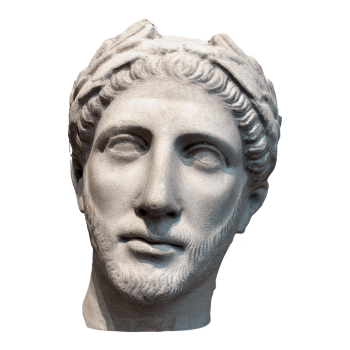
Portrait statue of a Cypriot man

Portrait statue of a Cypriot man
This statue is a portrait of a man from Cyprus, made around 350 to 250 BC. This statue was discovered in the Apollo Temple and has a height of 50.50 centimeters. It is now on display in the British Museum.
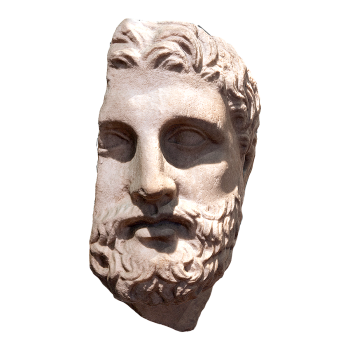
Marble statue of the head of a man with long beard
Marble statue of the head of a man with long beard

This marble statue is the head of a bearded man, possibly representing the ancestors of King Mausollos. This work was discovered around 350 BC in the main sculptural sediment north of the North Peripolis Wall, carved from marble. This statue is now on display at the British Museum.
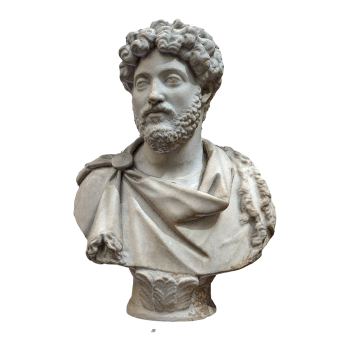
Marble bust of Roman Emperor Marcus Aurelius

Marble bust of Roman Emperor Marcus Aurelius

This marble statue is the bust of Roman Emperor Marcus Aurelius, wearing a tassel cloak. The height of this statue is 73.66 centimeters and it comes from Jason Magnus' house. The production date of this statue is approximately between 160 and 170 AD. This statue is now on display at the British Museum.
Lucius relief bust

Lucius relief bust

This Roman stone tomb relief depicts Lucius Antius Philomorsus, his daughter, and his wife. The relief is depicted in the style of the Roman Republic. The production date of this work is from 15 BC to 5 AD, and the dimensions are: height of 61 centimeters, width of 165 centimeters, and depth of 18.5 centimeters. This relief is currently housed in the British Museum.
Statue of Ganesha, the dancing elephant head god

Statue of Ganesha, the dancing elephant head god

This statue was made in North India around 750 AD, and the elephant headed god Ganesha is one of the most popular deities in Hinduism. He is the son of Parvati, revered as the Lord of the Beginning, as well as the creator and remover of obstacles. The statue is currently housed in the British Museum.
Male statue from Cyprus

Male statue from Cyprus

This statue is the upper half of a huge limestone statue depicting a bearded man, possibly an worshipper or priest. The statue depicts a standing figure wearing a pleated robe, with a cloak draped over his left shoulder and a serrated fold at the edge. This statue can be traced back to 450 BC to 425 BC, with a height of 1.04 meters. The complete statue is at least 2 meters high. The statue comes from Cyprus, possibly from the Temple of Apollo, and is now located in the British Museum.
Inscribed clay tablets from the Third Dynasty of Ur

Inscribed clay tablets from the Third Dynasty of Ur

The length of this mud board is 14.10 centimeters and the width is 2.80 centimeters. There are four columns of inscriptions on this clay tablet, which come from the Third Dynasty of Ur. The Third Dynasty of Ur, also known as the Neo Ur Empire, was established by the Sumerian city-state of Ur and ruled over the entire Mesopotamia from 2112-2004 BC. The two corners and left side of the mud board have been broken. This mudboard may have been found in the Umma area of Ur city. The inscription on this clay tablet may be related to the Shulgi of the Drehem calendar.
Buddha's seated statue from the 2nd to 3rd century AD

Buddha's seated statue from the 2nd to 3rd century AD

This Buddha statue may have been made in the Gandhara region (now Pakistan) in the 2nd to 3rd century AD. The height of this Buddha statue is 95 centimeters, the width is 53 centimeters, and the diameter is 24 centimeters. This Buddha statue depicts the Buddha sitting and preaching. The Buddha's gesture is very special. This gesture, also known as the clay jar or the Dharma wheel, reveals that the Buddha is telling a sermon, explaining the four noble truths of human existence and the path to enlightenment. This statue is currently located in the British Museum.
Sandstone slabs carved with pine fish in the Middle Ages

Sandstone slabs carved with pine fish in the Middle Ages

This is a carved sandstone slab depicting Matsya, the first incarnation of the Hindu god Vishnu. In many legends, the pine fish is described as the ancestor Manu who saved humanity from the Great Flood. This sculpture was made in the 9th and 10th centuries. This sculpture is currently on display at the Medieval Europe Gallery (G33/od) of the British Museum.
Statue of Strangford Apollo in ancient Greece

Statue of Strangford Apollo in ancient Greece

Strangford Apollo is an ancient Greek statue depicting a naked boy with missing arms and lower legs. This statue was made around 490 BC and is one of the latest examples of youth sculpture type statues, made of Parian marble. This statue has been in the collection of the British Museum since 1864.
Marble bust of Emperor Grommacus Aurelius

Marble bust of Emperor Grommacus Aurelius

The height of this bust is 73.66 centimeters. Marcus Aurelius (April 26, 121 AD - March 17, 180 AD) was an emperor of the ancient Roman Empire who reigned from 161 AD to 180 AD. He was a philosopher of the Stoic school, known for his philosophical ideas and the book "Reflections". He was also a member of the Nerva Antony dynasty, hailed as the last of the five good emperors and the last emperor of the Roman Empire's peaceful era (27 BC to 180 AD). This statue is currently housed in the British Museum.
Roman Emperor Caracalla marble bust

Roman Emperor Caracalla marble bust

Caracalla was an emperor of the Roman Empire who reigned from 198 to 217 AD. He is known for his strict and cruel way of ruling. This bust has a height of 67.50 centimeters and was discovered at Quattro Fontane on Quirinal Hill in Rome. It is now on display in Gallery 70 of the British Museum.
Ancient Roman Antinos Head Marble Statue

Ancient Roman Antinos Head Marble Statue

The head of this marble statue was taken from a statue of Antinos, who was wearing an ivy wreath. The bust was added later, with the head fixed on top. The head of this statue dates back to the Roman period and was made around 130-140 AD. It was excavated on the Janiculum Mountain in Rome, Lazio, Italy, in Europe. The height of the head of this statue is 81 centimeters and it is currently housed in the British Museum. Antinos was the boyfriend or lover of Roman Emperor Hadrian.
The human shaped coffin lid of the ancient Egyptian mummy Irthorru

The human shaped coffin lid of the ancient Egyptian mummy Irthorru

This wooden humanoid coffin lid comes from the ancient Egyptian mummy Irthorru, who was a priest of the Min and other divine sects of Akhmim's family. This coffin lid is 26 centimeters high, 183.50 centimeters long, and 54.50 centimeters wide. The inscription on the coffin lid includes the title of 'Priest of Min'. This coffin lid is housed in the British Museum but has not been exhibited in any exhibitions.
Marble statue of the head of King Apion of Selenica in ancient Greece

Marble statue of the head of King Apion of Selenica in ancient Greece

Ptolemy Apion was the last king of Cyrenaica in Greece from 150 BC to 145 BC. He is a member of the Ptolemaic dynasty. This statue was made during the Hellenistic period in the 1st century BC and is 36.83 centimeters tall. The statue was discovered in the Temple of Apollo on Mount Panathos in central Greece and is now located in the British Museum.
Moxijia Fire Snake Stone Carving

Moxijia Fire Snake Stone Carving

This sculpture showcases all the features of the fire snake Xiuhcoatl, blending reality and mythical creatures, including its snake head, short legs, claws, and curved nose. The end of the tail of the fire snake is composed of the traditional Mexican year symbol (xihuitl): a triangle resembling a sun ray symbol and two intertwined trapezoids. This work may be used to decorate buildings. According to Mexican antique collector Guillermo Dupex, it comes from Texcoco, a city on the east coast of Lake Mexico where the Mexican capital of Tenochtitlan was founded. This sculpture is currently located at the British Museum
Granodiorite statues from the 26th Dynasty of ancient Egypt

Granodiorite statues from the 26th Dynasty of ancient Egypt

This statue is a kneeling statue made of granite from the 26th Dynasty, and it is the image of Mentuemhat. The stone tablet on the statue depicts a scene of worship, with eleven rows of pictographic characters on it and two columns of pictographic characters on the back pillar. Mentuemhat was a wealthy and powerful official during the 25th and 26th dynasties of ancient Egypt. He was the mayor of Thebes and the fourth priest of the god Amun. This statue may have originated from Mentuemhat's tomb in Assassif, Thebes. This statue is currently located in the British Museum.
Bronze incense burners during the Qianlong period

Bronze incense burners during the Qianlong period

This incense burner was commissioned by Emperor Qianlong and bears the words' Made in the Qianlong Year of the Qing Dynasty ', possibly originating from a magnificent royal temple. Approximately 14 centimeters in height and 26.7 centimeters in diameter. This incense burner is a cultural relic from the Qianlong period of the Qing Dynasty (1736-95). Now it is collected in the British Museum.
Babylonian Cyrus Cylinder

Babylonian Cyrus Cylinder

The Cyrus Column is one of the most famous icons in the ancient world. It was excavated in Babylon in 1879. This cylinder was ordered to be inscribed in Babylonian cuneiform script by King Cyrus the Great of Persia after occupying Babylon in 539 BC. This cylinder records in detail how Cyrus the Great conquered Babylon, how he restored various temple statues removed by the former Babylonian king Nabonidus, and his work in Babylon. This cylinder is now preserved in the British Museum.
Jennings Dog Marble Statue

Jennings Dog Marble Statue

This statue is called Jennings Dog, also known as Duncombe Dog or Alcibiad's Dog. It is a marble statue of a Molossican dog with a trimmed tail, a Roman replica of a copper original from the Hellenistic period. This statue is 1.05 meters high and was discovered in Monte Cagnouolo, Rome. This statue became very famous after arriving in England and was praised as one of the masterpieces of Roman animal sculpture. It was acquired by the British Museum in 2001 and is now exhibited in the G22 exhibition hall.
Half body portrait of Nikus

Half body portrait of Nikus

This statue is made of green basalt and is dressed in military uniform. The nose was destroyed, possibly by Christians carving a cross on their forehead during the late Christian period. There are other damaged areas around the chest and nose. This statue is 47 centimeters high, 30 centimeters wide, and 24 centimeters deep. It is carved of Nikus, who was the nephew of Roman Emperor Augustus and the fifth emperor of the Roman Empire. This statue may have been made around 19 AD and is now on display in the G70 exhibition hall of the British Museum.
Goldfish shaped root

Goldfish shaped root

Genfu is a type of miniature sculpture art from the Edo period in Japan (1615-1868), commonly used for decorating and securing small items hanging on kimono belts. This goldfish shaped rootstock is made of boxwood by rootstock sculptor Masanao Ise, and the eyes are set with light and dark keratin. This root has a width of 5.5 centimeters and is located in the British Museum. Masanao Masanao (Ise) was a famous root carving artist during the Edo period in the 19th century. His works usually depict animals, and he is considered one of the greatest artists in the art form of Genfu.
Sir Hans Sloane clay bust

Sir Hans Sloane clay bust

This bust was made of clay by British sculptor Michael Risbrak, depicting the image of Sir Hans Sloane. His head is slightly turned to the right, with a mole on his left cheek, wearing a delicate wig, and a jacket with a lace collar. The size of this bust is 68.50 centimeters high and the maximum width is 60 centimeters. Sir Hans Sloan was a British doctor, naturalist, and collector born in Ireland, known for bequeathing his collection to the country, which laid the foundation for the establishment of British museums. This bust is now housed in the British Museum
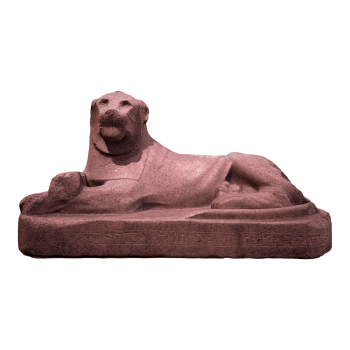
Ancient Egyptian Lion Sculpture

Ancient Egyptian Lion Sculpture

This is one of a pair of lions. The sculpture is carved from red granite, with each lion measuring approximately 1.20 meters in height and 2.20 meters in length. The sculpture is from the Sulib Temple in Nubia, which was built by King Amenhotep III of the 18th Dynasty. Later in the third century AD, it was transferred to Gebel Barkal in Sudan by King Amanislo of the Meroe Kingdom. In the early 19th century, Lord Prudhoe took the lions from Gebel Barkal and handed them over to the British Museum in 1835.
1 2 Next